
Public Schools of Calumet, Laurium and Keweenaw
Building a Path to Personal Success
Where in Michigan can you find…school buses driving in snow eight months of the year? A district where high school athletes have gone on to professional success? A JROTC program over 100 years old? A school system moving toward student-centered learning for all students? You will find all this and more at The Public Schools of Calumet, Laurium & Keweenaw (CLK).
CLK is the northernmost K-12 school district in Michigan, covering 419 square miles on the Keweenaw Peninsula. Its main campus, located adjacent to the Keweenaw National Historical Park headquarters, uniquely connects the elementary, middle, and high school buildings, a significant benefit for staff and students in a region that often receives over 300 inches of snow annually. In addition to these connected schools, CLK offers a comprehensive range of programs, including an early college program, Horizons Alternative School, and the CLK Virtual programs with its homeschool partnership.
CLK’s main campus is a blend of past and present. The Calumet Public-School Library, housed in the high school, required unique security solutions during renovations to ensure the public could access the library without free access to the rest of the facility. The district has also renovated a downtown building for its Virtual Learning programs.
The student body, predominantly of Finnish and Scandinavian descent, faces unique challenges due to the area's remoteness and historic economic shifts; over half of CLK's students are considered under-resourced. With average class sizes of 22, the district maintains a strong focus on individual student success.
The district's move toward personalized learning has been more than a decade in the making. In 2011, CLK was one of the first in the state to go 1:1 with student devices, now using Chromebooks in K–12. To move beyond devices, the district utilizes Learning Management Systems (LMS), including SeeSaw for grades K–5 and Schoology and Google Suite for grades 6–12, allowing students to access content anytime, anywhere.
A strong focus on relationships is the bedrock of the district’s success. CLK is a Capturing Kids’ Hearts (CKH) district, with all schools being recognized as a National Showcase School. This commitment to the social-emotional well-being of both staff and students creates the relationship-driven culture necessary to develop programs that truly meet student needs. COVID-19 accelerated this shift, serving as a catalyst that propelled staff to effectively utilize their LMS for both online and in-person engagement. Consistent monthly early release days continue to support teacher collaboration and professional development on student-centered topics.
This highlight features some of the innovative options CLK is providing to students as they build their own path to personal success.

Innovation and Imagination Thrive at CLK Elementary School
CLK Schools demonstrates its resiliency and dedication to student growth through its willingness to explore new educational models. From 2021–2023, the district piloted the innovative CLK Engage competency-based microschool program for elementary students. While the program is no longer offered, the experience yielded valuable insights, specifically that CLK students thrive with more hands-on learning, require more movement, and need diverse opportunities beyond the classroom. These key lessons are actively shaping the district's transition toward new student-centered learning models and a greater emphasis on student voice and choice throughout its schools.
Supporting the Whole Child and Innovation
To support both academic success and student well-being, CLK Elementary introduced positive changes to the daily schedule.
Throughout the day, students enjoy a “Copper King Recharge” or “Royal Reset” approximately every hour. This purposeful time to move their bodies, get outdoors, and take a mental break is inspired by the Finnish educational model, which emphasizes frequent movement. Whether through recess, movement breaks, or Specials (Gym, Music, STEAM, Library), these intentional pauses are based on educational research into movement and mindfulness. They are proven to boost attention, reduce stress, and improve overall classroom performance.
This commitment to student well-being and active learning has been validated by significant results: data shows behavior referrals have decreased by more than 75% due to the increase in brain breaks and the addition of the new creative spaces. Students report feeling happier and finding it easier to concentrate, contributing to improved attendance and classroom performance.
Makerspace Classroom and STEAM Lab
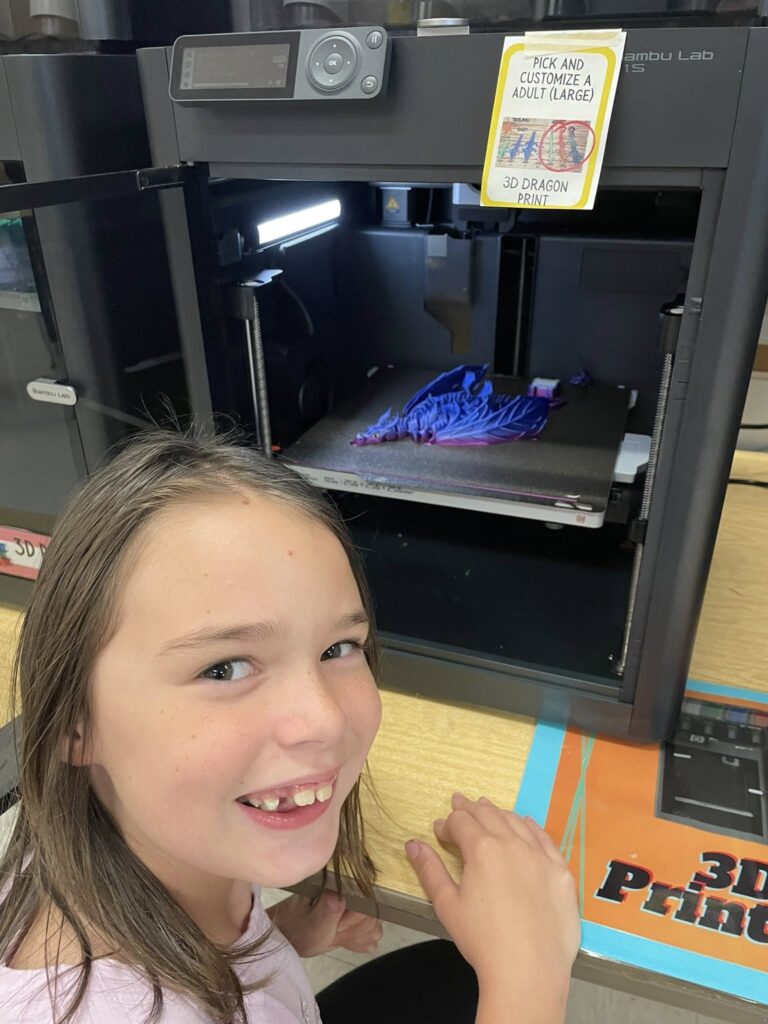
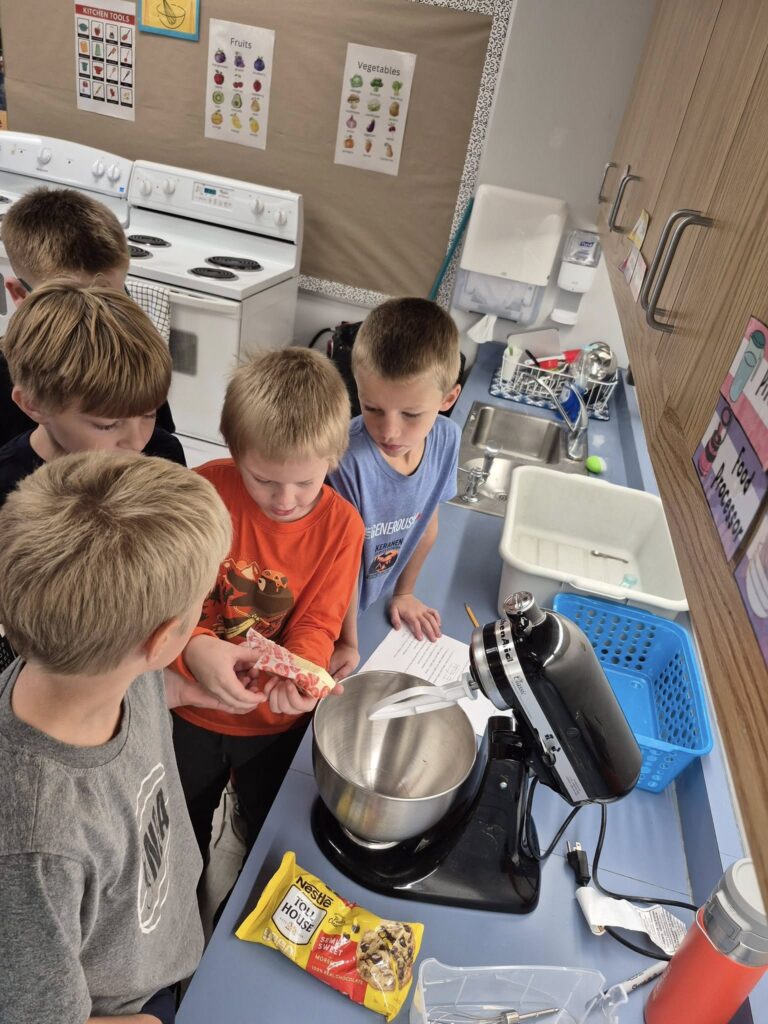
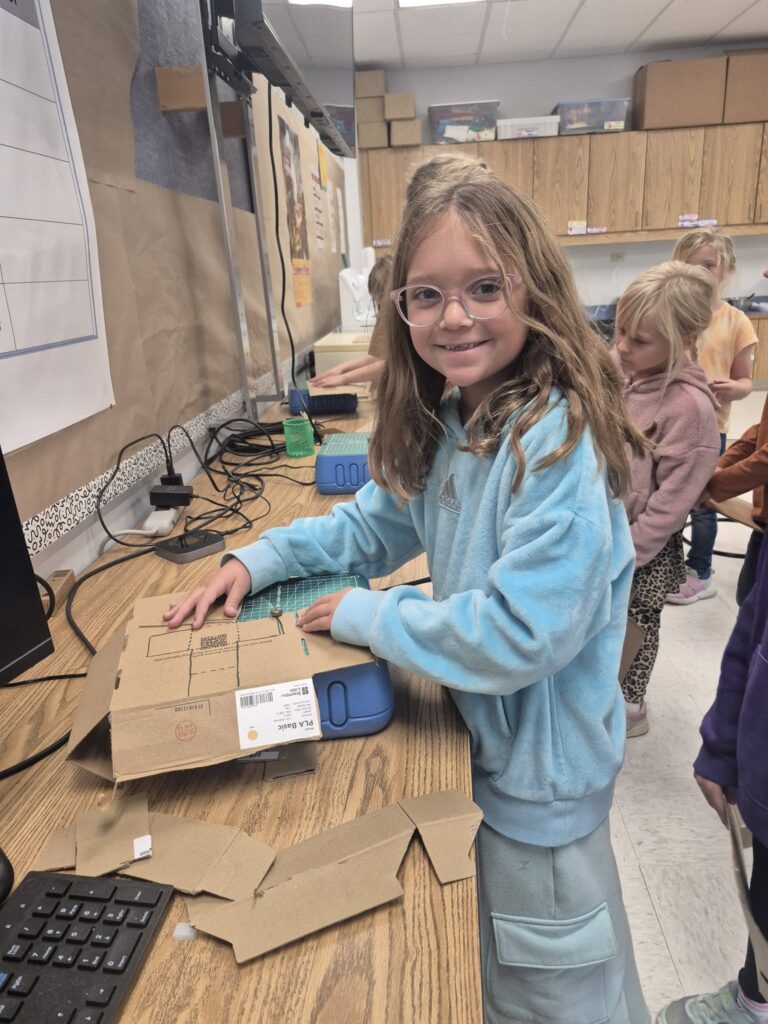
Innovation has been significantly boosted by the creation of a makerspace classroom and a dedicated STEAM room. The makerspace functions as a hands-on, creative hub where imagination comes alive. It is utilized by both individual classroom teachers and the STEAM teacher, all of whom received professional development on integrating its resources for hands-on learning. This space moves beyond traditional building materials; it includes a variety of tools such as a Cricut machine and a Chomp Saw (cardboard cutter), which students have used to turn flat templates into solid objects. Uniquely, the makerspace is also equipped with stoves for cooking and baking, allowing students to apply math and science concepts in a culinary setting through activities like bake-offs and learning fundamental food preparation skills.
In the separate STEAM room, students take an elective class with a dedicated STEAM teacher, engaging in cutting-edge technology and coding activities using tools like Spiros for learning block code, TinkerCAD, and Code.org. Hands-on learning is reinforced through Osmo games, LEGO education kits that include robotics and coding, and 3D printing. In both the makerspace and the STEAM room, students design, build, and problem-solve, allowing them to think like engineers, collaborate like teammates, and approach challenges with curiosity and confidence.
Experiential Learning by Grade Level
PC: CLK Elementary FB page
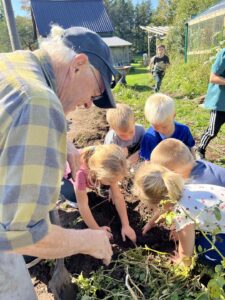
CLK Elementary utilizes its historic, natural setting and strong community partnerships as a living classroom. Early grade levels focus on place-based learning and nature exploration. Kindergarten students engage in a seed-to-table experience by planting and harvesting crops in the school garden and visiting local farms. First graders take their science learning outdoors through a special partnership with Michigan Technological University (MTU) educators, exploring hands-on science concepts and inspiring future innovators. Second graders dive into local history by visiting nearby landmarks and old mines, leveraging the school’s location within a historic national park to understand and take pride in their community’s rich heritage.
As students progress, the focus shifts to stewardship and career-connected innovation. Fourth graders demonstrate environmental responsibility by leading the school's recycling and composting efforts, turning lunchroom food waste into lessons about sustainability. Fifth graders dive deep into innovation through InventCon, a science and STEAM event that challenges them to design, build, and present creative inventions. Through this work, they learn essential public speaking skills, compete regionally in the Henry Ford Invention Convention, and utilize Computer Aided Design (CAD) software to explore career connections in engineering and design.
CLK Elementary intentionally structures its upper grades to promote student growth and ease the transition to middle school. Fifth-grade students rotate between core class teachers, fully preparing them for the next level. Students are mixed up as they move from one content area to another, mirroring the increased independence, movement, and variety of peers they will experience in middle school.
K.I.N.G.S. MTSS Program
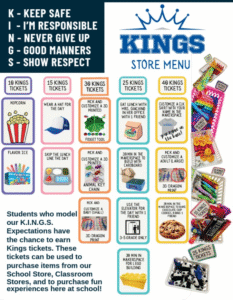
Positive behavior and academic support systems are reinforced through the school’s Multi-Tiered System of Supports (MTSS) program, known as K.I.N.G.S. (Keep safe, I'm responsible, Never give up, Good manners, and Show respect). Students earn K.I.N.G.S. tickets by demonstrating these core behavioral principles. The rewards system is highly personalized, allowing students to redeem tickets for items at the school store or for unique experiences like having lunch with the principal or assistant principal or earning time in the makerspace (with the option to bring a friend). This system successfully connects positive behavior with desirable, student-centered incentives.
Fostering Exploration and Real-World Skills at the Middle School
Building directly on this progression to independence, CLK Middle School focuses on exploration and real-world skills through expanded elective choice, preparing students for the wider range of options available in high school.
Outdoor Learning
PC: Washington Middle School FB page
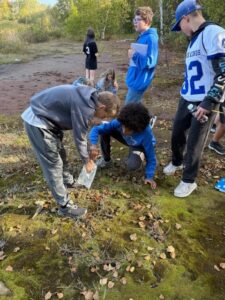
CLK Middle School is dedicated to providing students with opportunities for hands-on learning and exploration. Calumet's unique location in Michigan's Upper Peninsula, surrounded by the forests of the Keweenaw and the waters of Lake Superior, makes it a perfect "place" for this type of outdoor, real-world learning. In 8th-grade science, outdoor learning is integrated into the curriculum, with students collecting and analyzing water and moss samples from Calumet Lake as they study microorganisms. Through a partnership with the Lake Superior Stewardship Initiative (LSSI), 6th graders actively learn about sustainable forest management outside the classroom. They simultaneously build core knowledge and develop the skills to become lifelong stewards of the local land and water.
Expanded Encore Options for Students
Traditional study halls have been eliminated in favor of expanded Encore offerings, which are quarter- or semester-long classes designed to encourage students to explore different avenues of interest. While courses change annually, past options have included Robotics, Woodshop, Art, Metal Shop, and Music Appreciation. For the 2025-26 school year, all 8th graders take an Entrepreneurship Class that involves conducting market research, planning, and executing a business plan, such as setting up a school store, and collaborating with the media class for product promotion. This work develops essential skills like problem-solving, collaboration, and critical thinking. Seventh-grade students engage in a nine-week Farm-to-Table course, covering topics like hydroponics, nutrition, and budgeting, and a Media Literacy class where they learn about digital citizenship and online responsibility, and create content like newsletters for the district, comic strips for elementary students, and a digital portfolio to demonstrate their learning.
Makerspaces: More Than Technology
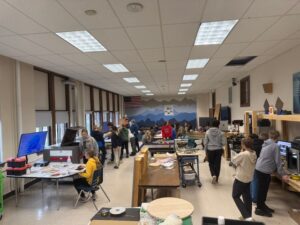
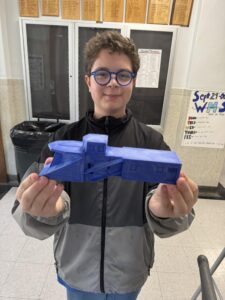
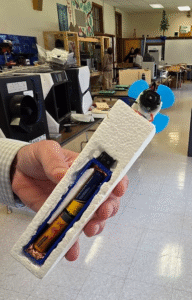 The school's commitment to student-centered learning is most evident in its makerspaces, which are used for STEAM classes, Encore courses, and Flex Labs (now in their seventh year). Thanks to financial donations from alumni and community members, the school established makerspaces on both floors. Among the equipment students use are 3D printers, three laser engraver machines, a laminator, and a soldering station. One of the makerspaces also features a foam cutting station, allowing students to create a proof of concept before utilizing metal, wood, or plastic. The STEAM teacher instructs students on how to run and repair the machinery. Students apply cross-curricular skills through individual or class projects like the flag project (creating a flag from available materials), a 3D-printed engine with moveable pistons, and practical applications like fixing the school popcorn maker and 3D-printing small scrapers to get the object off the 3D printer beds. These spaces help teachers break away from their siloed lessons and allow students to apply the standards to their passions within all subject areas.
Transitioning away from traditional study halls to more student-centered learning options was a direct response to the remarkable success and high student engagement observed. Staff members, inspired by the increased participation and excitement in the after-school programs, the focused learning during Flex Labs, and the innovative projects in the makerspaces, recognized the potential for this approach. This collective inspiration led the school to expand its Encore offerings significantly. The three staff Professional Learning Communities (PLCs) were instrumental in driving this shift, studying student behavior, school culture, and assessment data to effectively incorporate student-centered learning throughout the curriculum.
The introduction of personalized learning strategies at Washington Middle School has resulted in a significant improvement in student engagement and behavior, validating the shift toward more student-centered programming. The implementation of their Multi-Tiered System of Supports (MTSS) and the overall function of the school have led to a dramatic decrease in major discipline referrals, dropping from 141 in 2020–2021 to 23 for the 2024–2025 school year. This culture change, supported by structured academic interventions like Flex Time support, Guided Study, Math Lab, and READ 180, is successfully addressing academic challenges. Early monitoring data for core subjects reveal a tremendous decrease in the percentage of 7th and 8th-grade students failing two or more classes, demonstrating that personalized academic support is highly effective in improving student performance and ensuring that fewer students fall behind.
Calumet High School: Blending History and High-Tech Personalization
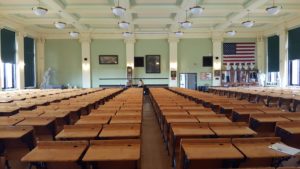
Historic Study Hall
Calumet High School (CHS), a four-story building that recalls the grandeur of schools from a bygone era, provides a learning environment that seamlessly merges the past with the present for its approximately 500 students. This blend is evident everywhere, from students using digital devices in the historic study hall to the high-tech instruction in its basement labs. CHS offers a broad spectrum of educational choices, including hands-on project-based learning, online courses, Career and Technical Education (CTE), work-based learning, and Junior ROTC (JROTC). To support academic continuity, the district even maintains mobile Wi-Fi hotspots for students to work during long bus rides to athletic events.
The school's massive, high-ceilinged study hall, centrally located on the second floor, is the building’s strongest tie to history. Though renovated to its original colors and design with bolted-down wooden desks, the room remains a core space used for SAT testing, school presentations, and, true to its original intent, focused student learning.
Personalizing the High School Experience
CHS has invested in the tools necessary for personalized learning: individual devices, an LMS for housing resources and teacher-made videos, and a wealth of options for students. These choices, which include CTE programs, JROTC, dual enrollment, and the Early College program, empower students to shape their own academic paths. While flexible scheduling presents a continuous challenge due to the school's size, staff and administration are committed to forging a path toward greater student personalization.
Hands-On Industrial Arts and Innovation
One shining example of personalized learning is the Industrial Arts program. The Fabrication Lab, located in the basement, boasts modern manufacturing equipment, including a Haas CNC Mill, a CNC Lathe, 3D printers, and a laser engraver. Students use drafting/CAD equipment to move projects from concept to prototyping and testing. They not only learn to use the complex machinery but also how to maintain and repair the CNC mill. This lab is accessible to all district classes and supports the Copper Bots robotics team by allowing the CAD class to rapidly and cost-effectively machine and print parts for their robots.
Complementing the Fabrication Lab, the welding program offers a repeatable one-semester course, open to all students. This elective emphasizes an artistic approach to metalworking, and students frequently use the Lincoln Torchmate CNC Plasma cutting system. Students fluidly move between the wood shop, metal shop, and fabrication lab to design and build unique projects, developing the latest design technology skills and competing successfully in events like SkillsUSA and MITES competitions.
PC: Calumet High School FB page
JROTC: Leadership and Citizenship
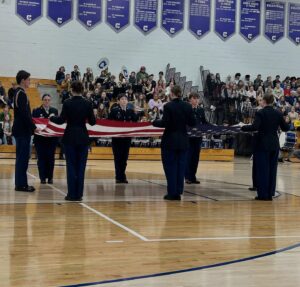
The North Star Battalion, Calumet’s JROTC program, is one of the oldest in the nation, founded in 1917. Serving as a character and leadership development program, not a military recruitment tool, its mission is to motivate students to become better citizens. Led by retired military instructors, the program consistently enrolls about one-quarter of the high school student body.
JROTC is both curricular and extracurricular. Students enroll in elective classes that build leadership capacity through challenges like rappelling, rock climbing, and cybersecurity. Outside of school, cadets perform at local events, mentor students at 6th-grade camp, organize events to raise money for suicide prevention, and run a yearly Veterans’ Day program. With approximately 33% of cadets staying all four years, students move up the ranks and assume significant leadership roles.
Dual Enrollment and Early College
CHS provides specialized support for students pursuing virtual education and college credits. Students taking online courses can utilize the Online Learners Lounge, a relaxed space with comfortable seating where a teacher is available to assist.
The district's most significant college-prep opportunity is the CLK-Gogebic Community College (GCC) Early College program, an eight-year agreement that enrolls students in each grade. Students complete their first two years of college coursework on the high school campus, taught by Calumet teachers hired by GCC. During their junior and senior years, students benefit from a flexible, college-style schedule. In their optional fifth year, students can take courses at GCC’s main campuses or at the high school. Students can earn any associate’s degree offered by GCC, with popular fields including nursing, engineering, and welding. This program is prioritized over AP courses due to student interest and demonstrated success.
Horizons Alternative Education School: Personalized Learning and a Student-First Family
For students seeking a highly specialized and flexible educational path, CLK offers the Horizons Alternative Education School, which prioritizes small class sizes and personalized well-being. Established in 2005, Horizons is located about six miles north of CLK’s main campus. Housed in a former elementary building, the facility supports its unique culture with four classrooms, a computer room, a gymnasium/cafeteria, a student lounge, a makerspace, and resources like a weight room with an infrared sauna, a laundry room, and a food pantry. The campus even features an ice rink in the winter. Averaging 50 students per year, the school keeps class sizes intentionally small (12 to 15), providing students with the personalized attention needed to earn a high school diploma with the same graduation requirements as the traditional high school. Horizons was also the first official Green School in the UP (2008–2009).
Personal Well-Being
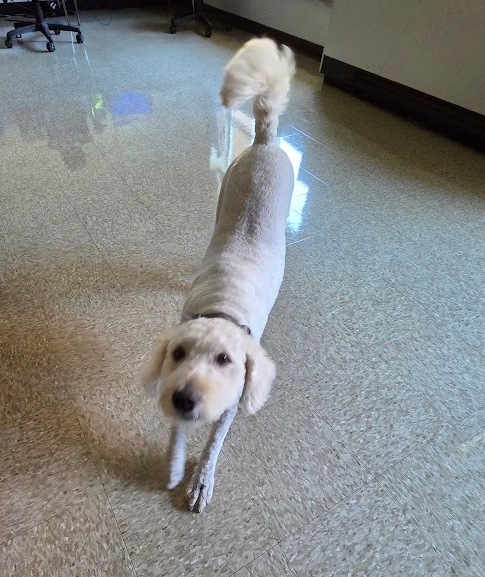
The dedicated staff, which includes the principal, an administrative assistant, four core teachers, a resource room teacher, a credit recovery mentor, a counselor, a school resource officer, and 3 canine companions, cultivates a strong family atmosphere that extends beyond academics. They take pride in working closely with every student to ensure daily attendance, even allowing students to bring their babies to class to remove barriers to completing their education.
When students arrive by bus each morning, teachers meet them at the door with a smile and a fist bump. They know first thing if a student is having a bad day or what kind of mood they are in through this greeting. At the beginning of every day, students meet with their mentor in homeroom. They go over goals for their day and report their stress level on a scale of 1-10. The staff and students spend time together, allowing them to get to know each other well, just like a family.
PBL at the Core
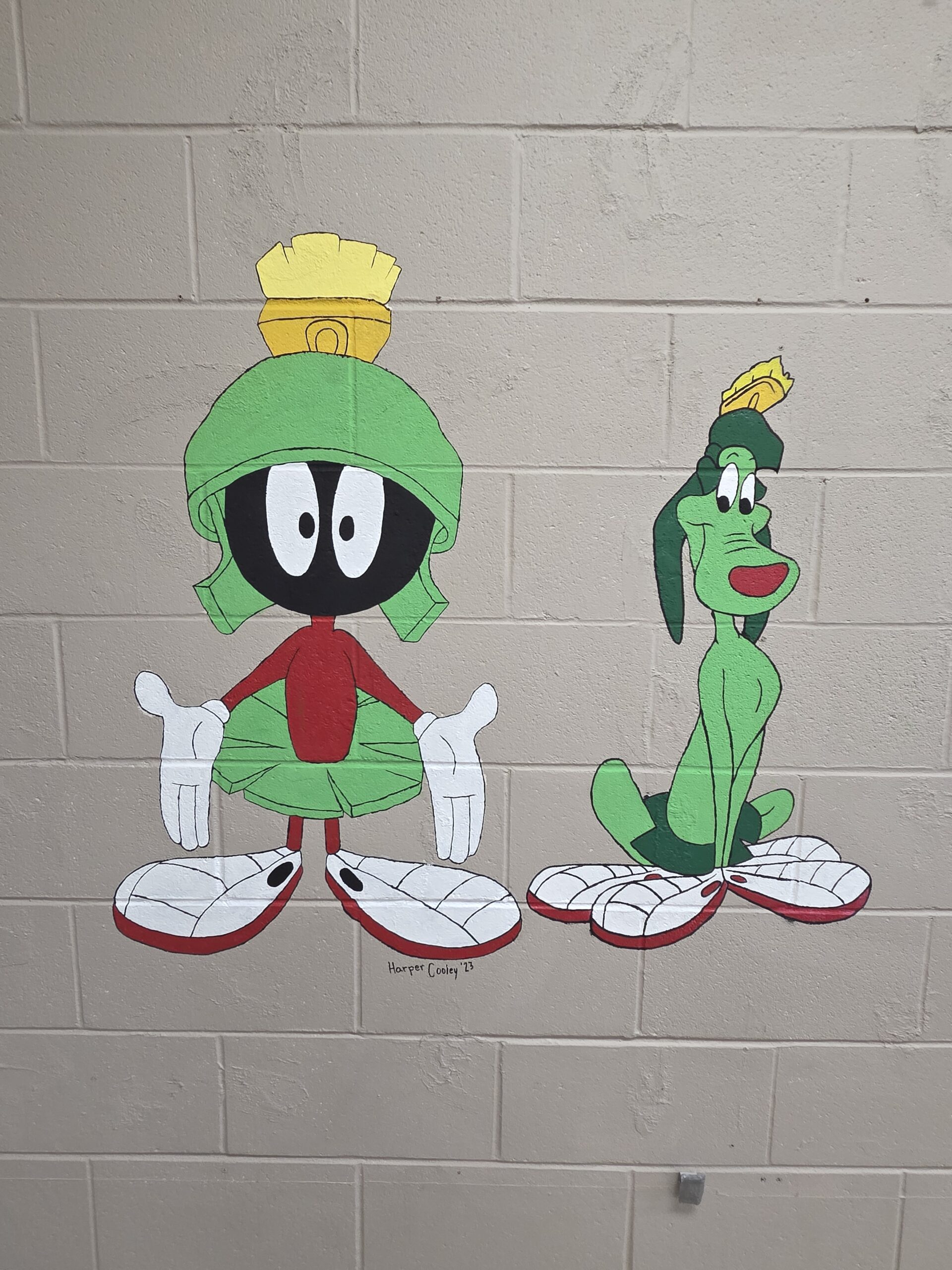
Project-Based Learning (PBL) is a cornerstone of the curriculum at Horizons, serving as a primary component in the school's shift toward voice and choice learning. To undertake a project, students must submit a formal proposal, giving them ownership over their education. This approach has led to numerous student-led initiatives, such as creating vibrant murals on the school walls and developing an interactive website for identifying rocks at the Gratiot River Mouth (an ongoing language arts/science project). Another key experiential, place-based learning opportunity is the annual school trip to Copper Harbor. During their English class, students write grants to secure funding for the trip, while also creating the budget and planning the day's activities, which have included biking, hiking, kayaking, fishing, and berry picking. This annual, activity-packed excursion reinforces Horizons' commitment to continued experiential learning, excitement, and relationship building.
To maximize learning and minimize out-of-school demands, Horizons aims for students to complete all academic work during the school day. Every student has access to a computer for in-building use and can take one home with permission. Classroom teachers utilize Google Classroom to house and manage course content. Friday afternoons are dedicated to giving students more voice and choice. They can use the time for credit recovery to master content, or they can participate in Friday Club Time, which offers elective credits through various options, such as the new physical education courses in the weight room. While topics change weekly, past Friday Club activities have included making tea from foraged mushrooms, learning frisbee golf, taking guitar or cooking lessons, playing basketball or ice hockey, rock hunting, or building eSports skills in the game room. Beyond helping students find new hobbies or career interests, this time is invaluable for helping students and staff connect on a more personal level than is possible in a traditional classroom setting.
Space for Personalization
Another powerful opportunity for personalized learning and career exploration is the makerspace, which functions much like a professional workroom. Equipped with 3D printers, a laser engraver, a 36” printer, a copier, a rock tumbler, a Cricut machine, a laminator, and work tables, the space is purposefully "owned" by the students. They are responsible for keeping the room clean and operational, such as filling the printers with paper, adding filament to 3D printers, and making sure machines are turned off after use. By taking charge of their learning and teaching each other how to use the equipment, students are achieving true personalized learning and growing in their skills faster than when the school tried a formal class structure in the makerspace. Students use the room for both school-related projects and personal items like phone cases, car parts, and fidget spinners. Beyond academics, the makerspace serves as a valuable space for students to calm down and work through personal issues, demonstrating its benefit for both learning and well-being.
PC: Horizons High School FB page
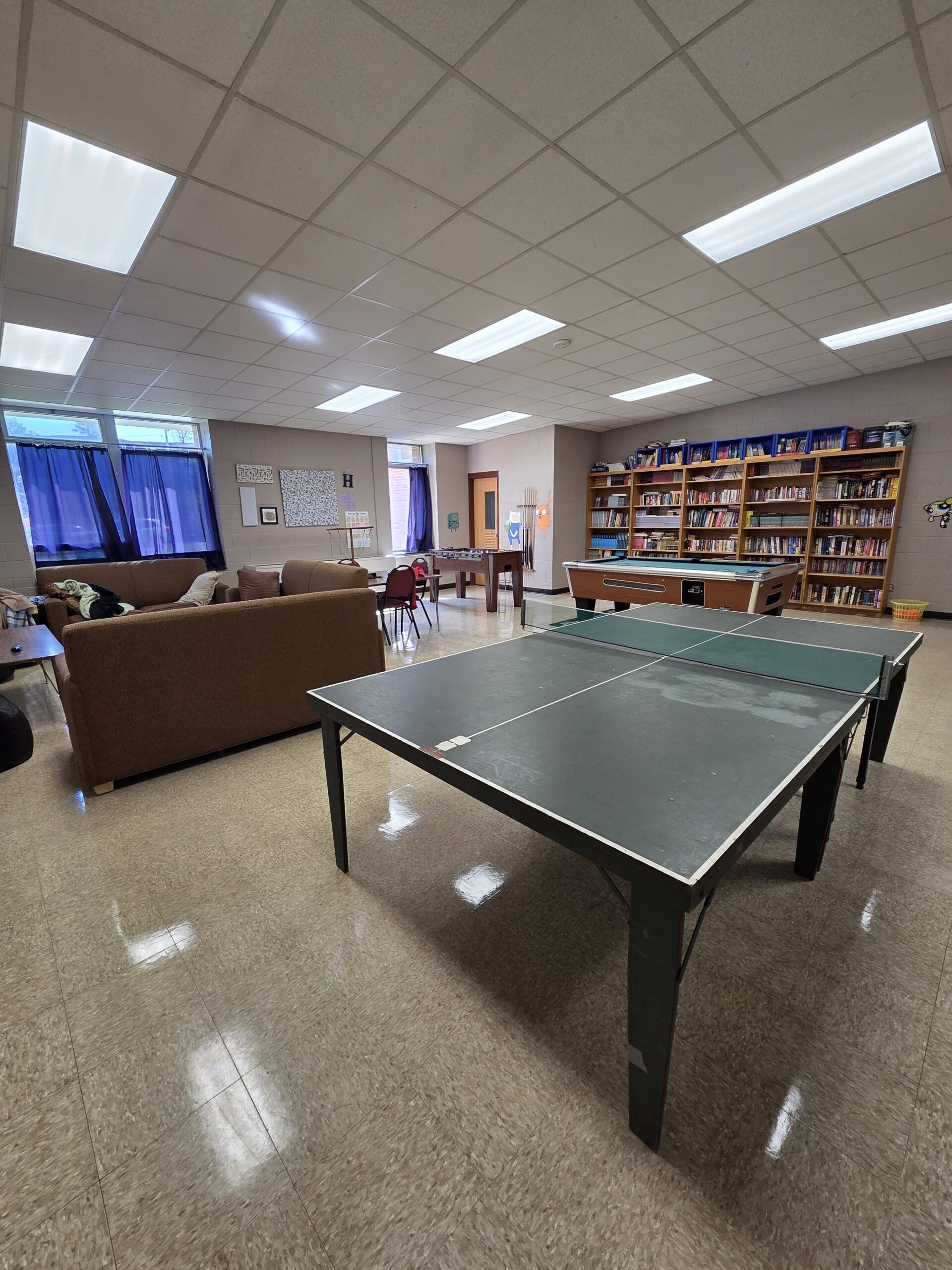
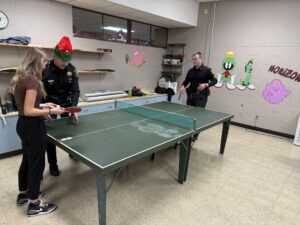
For students needing a change of pace or a moment to de-stress, there is also a dedicated student lounge. This multifunctional space allows students to either focus on classwork or simply relax. The room is equipped with a ping-pong table, pool table, foosball, couches, and musical instruments. Students chose to move the school's library into this lounge, which includes a coffee maker. Like the school's hallway murals, the walls of the lounge are decorated with original paintings created by students through project-based learning experiences. As this space is shared by the Horizons "family," students are expected to maintain its cleanliness and order, fostering a sense of collective responsibility.
The school features a dedicated game room that doubles as the computer lab. Students can use this room during lunch, breaks, or when they are caught up on all their schoolwork. It's equipped with entertainment options, including a PS5, an Xbox, and eight computers that students frequently use to play games like Roblox and Fortnite. Along with the makerspace, this game room is one of the most frequently utilized spaces by students, providing a crucial outlet for personal time or social engagement.
Beyond dedicated learning and relaxation spaces, Horizons ensures fundamental student needs are met, a principle best illustrated by the student-run food pantry. Created by the local organization 31 Backpacks, the pantry is intentionally unmonitored by staff or organization members. This allows students to self-regulate, taking only what they need to ensure there is enough for everyone. Items in the room include local fresh food, canned goods, boxed food, and frozen items like hamburger and other meats, as well as personal items and clothing.
Giving Back
Students also gain valuable service-learning experience by organizing and hosting an annual Halloween Carnival, an event that has been a community tradition for over ten years. This initiative, which began with a single class but now requires the entire school to run, gives students the opportunity to give back to the broader Keweenaw Peninsula community. Horizons students, some of whom were former attendees, are responsible for all aspects of the carnival, including creating new games, maintaining long-standing ones, promoting the event, and running the games. Now hosted at the Elementary School to accommodate over 400 attending children, the carnival is a practical lesson in event planning, leadership, and responsibility, while providing a fun, safe, affordable experience.
PC: Horizons High School FB page
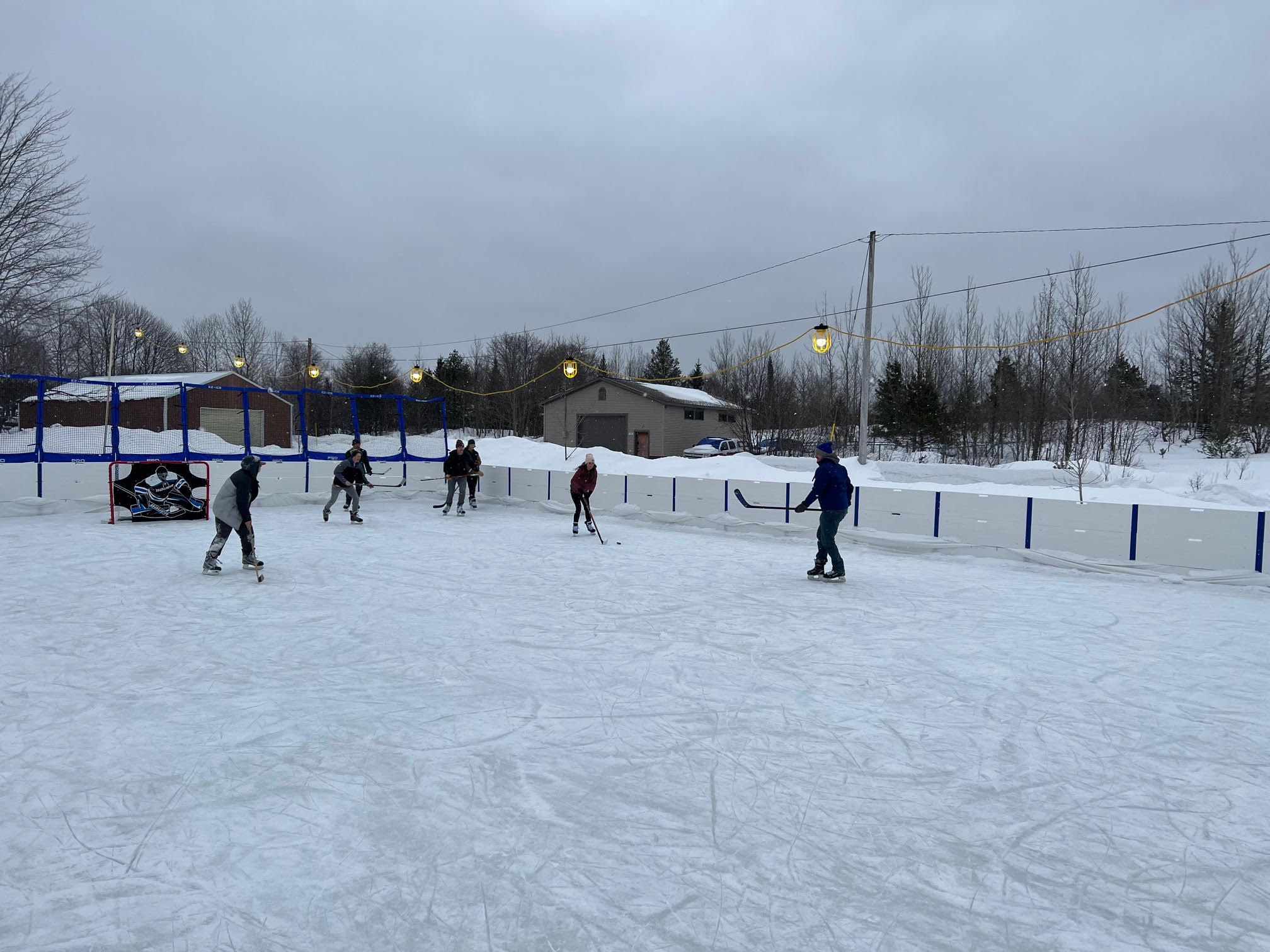
Students are also involved in a community ice rink housed on the school’s property. Each fall, Horizons students construct the boards on a recently built concrete pad. Once the weather cooperates, the students create ice by flooding the rink and preparing it for skating. Every day throughout the winter, students maintain the rink, which is open to community members after school hours. During the spring, summer, and fall seasons, the same concrete pad is utilized by the community for pickleball and basketball courts.
CLK Virtual Programs
Completing the district's array of personalized options, CLK Virtual programs offers flexible, customizable education designed to meet unique student needs outside of the traditional school structure. The program provides two main enrollment paths: full-time and shared-time (part-time). Full-time students take both core and elective courses through the Upper Peninsula Virtual Academy (UPVA), while shared-time students enroll only in elective classes, supplementing their existing home or private school curriculum.
 Full-time UPVA core and elective courses utilize different curriculum providers based on grade level. Middle and high school students receive their course content through Edmentum. The elementary curriculum is delivered using Lincoln Learning. Furthermore, families with students in grades K-8 have the additional option of selecting BookShark Virtual, a literature-based curriculum, for their core courses. While Edmentum and Lincoln Learning are fully online, CLK’s BookShark program is a hybrid where students come to campus two days a week and do the remaining work at home. These online courses, which are no cost to families through UPVA, offer flexibility in time and location, and are supported by a content expert teacher as well as a local mentor teacher who monitors progress. CLK’s full-time program enrolls approximately 260 students per year.
The part-time enrollment option through CLK Virtual is designed for students seeking flexible elective and enrichment courses to supplement their primary curriculum. These students can enroll in courses offered by UPVA, county-wide CTE courses, or through dedicated community partners like the Keweenaw Family Discovery Center, Community Alliance for Progressive Education (CAPE), and Kaleidoscope.
Optional Learning Experiences (OLEs), which offer a blend of virtual content and hands-on activities, are the core of the elective course experience. OLEs include instructor-led classes (both in-person and virtual) and self-directed learning activities, offered both at the CLK Virtual facility and at various community locations. Students can engage in unique electives such as pottery, sewing, guitar, piano, fencing, and self-defense, with a new woodworking class starting in the 2025-26 school year, thanks to donor funding for shop equipment. Unique outdoor OLEs include rock and ice climbing, facilitated through a partnership with the Michigan Technological University Rock Climbing Club. All OLEs are tied to the virtual content. For children aged 12 and under, a parent or parent-proxy is required to remain on-site at the facility or community location. The CLK Virtual facility supports the parents with a dedicated gathering area featuring a library, kitchen, and various seating.
The Public Schools of Calumet, Laurium & Keweenaw is a district that honors its rich history while resolutely focusing on the future. Through its dedicated staff, strong community partnerships, and innovative programs, CLK is actively building an environment where every student is seen, supported, and empowered. By prioritizing a student-first approach and embracing continuous evolution, the district is ensuring that students across the Keweenaw Peninsula are not just prepared for graduation but equipped to define their own path to personal and professional success.