
Gull Lake Community Schools
Blending Learning: Graduating Leaders
The mission of Gull Lake Community Schools (GLCS) is to educate every child to reach their full potential by providing a rigorous, personalized experience through a wide variety of choices. Serving over 4,500 PK-13 students across three counties, the district has established itself as a leader in educational innovation. By prioritizing student-centered learning, GLCS ensures that every child, regardless of their economic background or program selection, can design an education tailored to their unique needs and goals. While a large percentage of the community is middle- and upper-class residents, one-third of Gull Lake students are economically disadvantaged, making this personalized approach essential for equitable success.
Programs at Gull Lake Community Schools include an early learning center, two elementary schools, an intermediate school, a middle school, two high schools, an early college program, and a virtual partnership.
A Culture of Choice and Blending Learning
One of the most distinctive features of GLCS is its commitment to blending learning. Unlike traditional "blended" models that simply combine onsite and virtual instruction, Gull Lake allows students to move beyond "siloed" programs by blending different course offerings to create a schedule that is entirely personal to them. Students have the flexibility to mix and match courses from various enrollment options, such as taking traditional high school classes while simultaneously participating in the Gull Lake Virtual Partnership, dual enrolling at local colleges, or participating in Early College programs. This inclusive approach culminates at graduation, where students from various programs, including the traditional high school, the Gull Lake Early College, and Gateway Academy, have the opportunity to walk across the stage together as one student body. Social inclusivity is also a priority. In fact, all school dances, sports, and clubs welcome students from virtual, brick-and-mortar, homeschool, and alternative programs alike.
Building Foundations from Elementary to Middle School
Preparing kids for success begins at Gull Lake’s three elementary schools: Kellogg Elementary (PK-2nd grade), Richland Elementary (Y5-2nd grade), and Ryan Intermediate (3rd-5th grade). As with all Gull Lake programs, student data drives instruction for continuous improvement. Data at this level is gathered from sources including the Core Reading Program, Acadience, Delta CBM, STAR, NWEA MAP, M-STEP, and SWIS. This data is analyzed regularly, and immediate changes are made in instruction to improve student learning. Other vital components that assist in elementary school improvement include math/reading learning labs, after-school and summer programs, and dedicated counselors and social workers on staff. The district also maintains a partnership with Big Brothers/Big Sisters and utilizes systems like positive behavior support and Multi-Tier System of Support (MTSS) to ensure every child is supported.
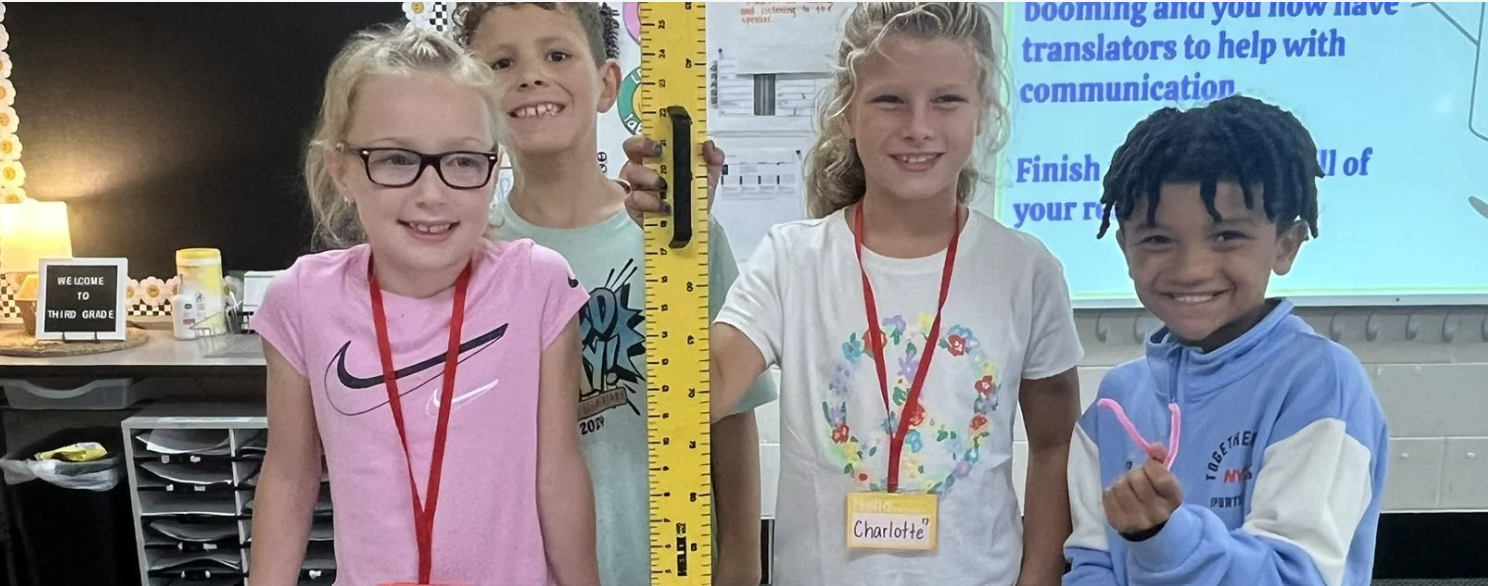
Programs like EXCEL provide academic enrichment for the top 10-15% of performing students in grades 1-5, while the Leader in Me process at Ryan Intermediate empowers every child to develop leadership habits through roles like the Greeter Team or Kindness Club.
A hallmark of Gull Lake’s commitment to innovation is its integration of Project Lead The Way (PLTW), which embeds STEAM (Science, Technology, Engineering, Arts, and Math) principles into all grade levels. Reflecting the district's excellence in this area, each building in the district has been recognized as a PLTW Nationally Distinguished School for its implementation of and equitable access to this highly engaging curriculum. Starting in elementary school with the PLTW Launch curriculum, students are immersed in hands-on, real-world challenges that blend computer science, engineering, and science while applying math and English Language Arts skills across disciplines. For example, students at Ryan Intermediate utilize a dedicated STEAM Lab to explore coding through block-based programming and design thinking.
This foundation continues into Gull Lake Middle School. Students engage in PLTW Gateway units such as Design and Modeling, Automation and Robotics, and Medical Detectives, where they tackle sophisticated projects like designing therapeutic toys for patients with Cerebral Palsy or using VEX robotics systems to navigate complex mazes. By encouraging students to collaborate, iterate, and learn from failure, the K-8 PLTW program ensures that every student develops the critical thinking and problem-solving skills necessary for success in high school and beyond.
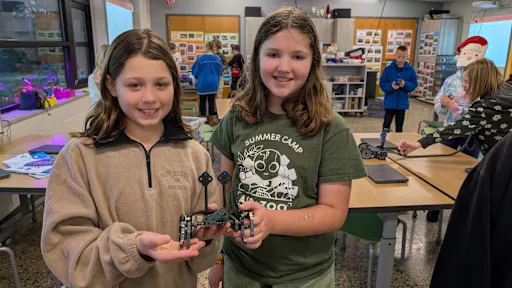
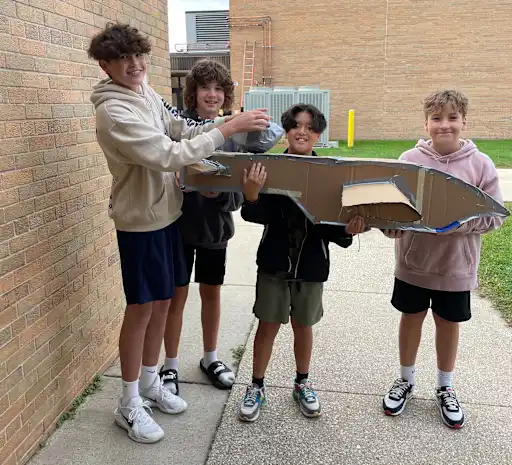
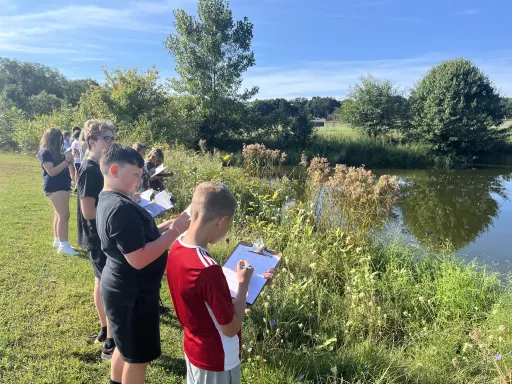
In addition to PLTW courses, middle school students engage in options that allow them to find their passions, including virtual courses, band, choir, career exploration, financial literacy, and drama. High-achieving 8th graders even have the opportunity to take advanced courses like Algebra I, ELA 9, and Spanish I.
Career Portfolios and SEL at the Middle School
As students move to middle school, the focus shifts toward self-awareness and career exploration. Students begin career development in 6th grade using Xello to develop an Educational Development Plan (EDP) that they continue to adjust through high school. Every middle schooler receives a school Chromebook to access Google Classroom and digital software used to remediate, extend, or accelerate their learning.
The school culture at Gull Lake Middle School is bolstered by the Positivity Project, which takes place during advisory and helps students practice 24 character strengths to build positive relationships and self-confidence. To ensure no student falls behind, the middle school offers a robust array of specialized supports, including dedicated ELA and math labs for remediation and a Reaching & Teaching Struggling Learners class that implements the Why Try curriculum to build self-awareness and resilience. All sixth-grade students receive lessons in their core class in collaboration with Integrated Services of Kalamazoo, focused on building executive functioning skills. Advisory, lab, and core teachers are focused on providing tiered interventions in the areas of reading and math for students who exhibit the need for additional academic support. The middle school has a multifaceted approach integrating social, emotional, and behavioral supports through the intervention, behavior, and counseling support staff.
Innovation and Autonomy in High School
In alignment with the district's overarching philosophy, Gull Lake High School (GLHS) facilitates personal learning communities, exposes students to skill-building activities, provides accelerated and extended learning opportunities, and delivers support for all students. School counselors utilize a comprehensive array of academic and elective tools to tailor each student's educational experience, centered around a meaningful Educational Development Plan (EDP) that is reviewed in personalized annual meetings. This focus on future success is further strengthened in the tenth grade, where many students enroll in the College and Career Readiness course to investigate higher education options, explore potential career paths, and sharpen their employability skills.
GLHS is a premier example of blending learning in action. Students do not have to choose between one program and another; they often mix them to pursue specific interests. For instance, some high school students co-enroll in Gull Lake Virtual Partnership courses such as Muscles and Movement or Social Media Marketing.
The Sports and Social Media Marketing program provides a perfect bridge between virtual coursework and real-world application. Students in this track work directly with the High School Athletic Director to manage media feeds, sitting down to discuss communication strategies before creating professional social media posts and digital content. To ensure success in these blended paths, a GLHS mentor supervises a virtual lab that is open every hour of every school day, resulting in a high rate of coursework completion.
Beyond virtual and elective options, students at Gull Lake High School have several pathways to earn college credit while still in high school. One popular route is through Advanced Placement (AP) courses, with at least ten different AP subjects offered on-site every year. The district’s commitment to academic excellence is reflected in its status as a College Board AP Honor Roll school, recognized for both increasing student enrollment in these rigorous courses and achieving consistent improvement in exam results. In fact, more than half of all AP exams taken by Gull Lake students earn a score of 3 or higher. Additionally, students may choose to dual-enroll in courses held off-site at local colleges or participate in the comprehensive Gull Lake Early College program.
High School Options to Build a Personalized Learning Path
- A wide variety of elective in-person courses in the high school building
- College courses through Dual Enrollment or the Gull Lake Early College program
- Virtual courses through the Gull Lake Virtual Partnership
- Career & Technical Education (CTE) and Education for the Arts courses through the Kalamazoo Regional Educational Service Agency
- Kalamazoo Area Math and Science Center courses through Kalamazoo Public Schools
- Academically Talented Youth Program through Western Michigan University
Building Work Skills Through Computer Science
A hallmark of personalized learning at Gull Lake High School is the Computer Science program. The program offers a structured yet flexible progression, including Intro to Computer Science, Computer Science Software Engineering (CSSE), Video Game Development, Cybersecurity, and the Innovation Lab. Throughout these courses, teacher Brad Lange acts as a mentor, guiding students through the necessary frustrations and failures that lead to eventual success.
Ninth-graders begin with Intro to Computer Science, learning Python and app development. Following Intro to Computer Science, students have the option to pursue software engineering, video game development, cybersecurity, and/or the innovation lab. Additionally, students can move on to pursuing independent certifications through a guided journey with Mr. Lange’s support.
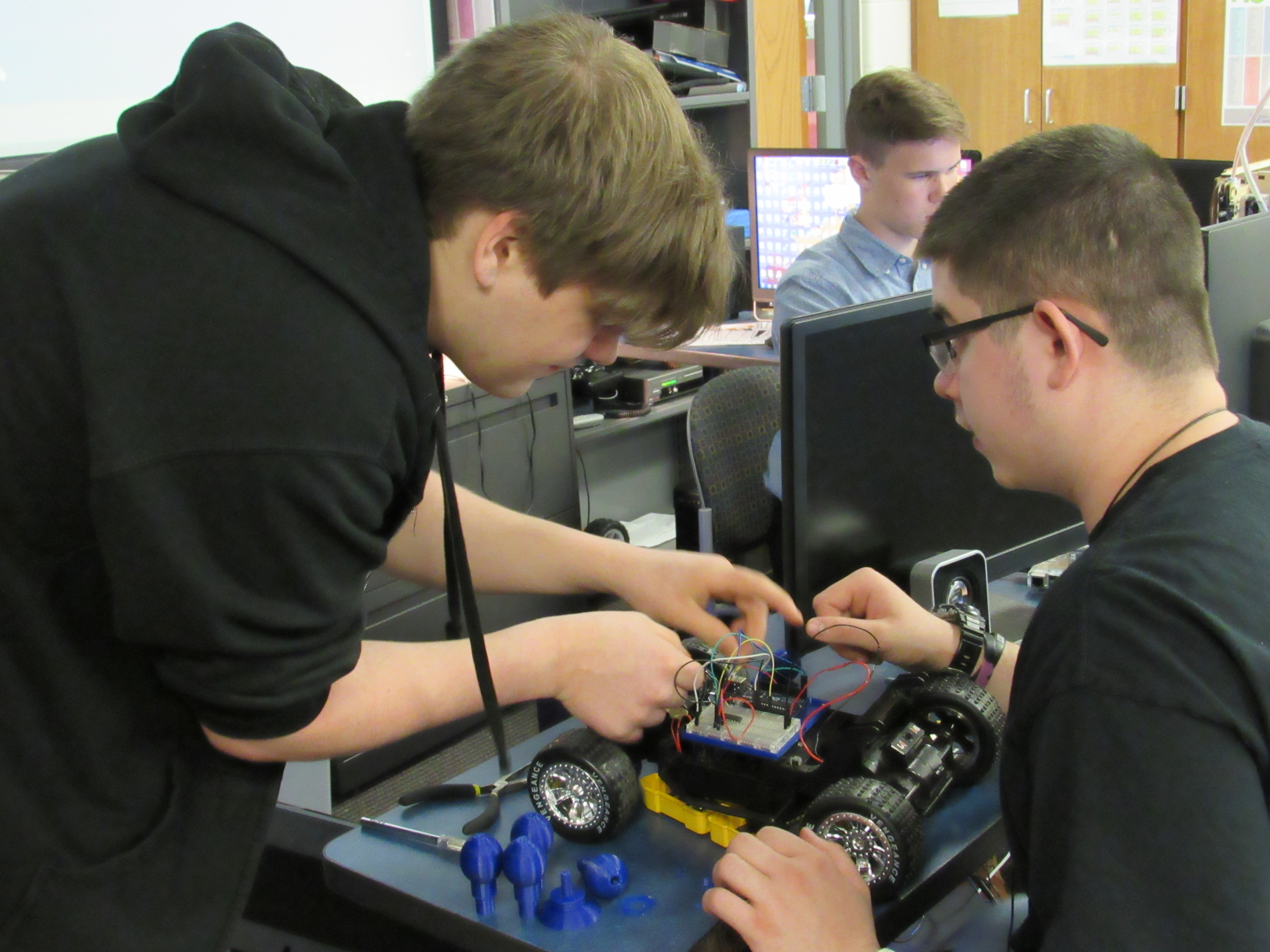
In the CSSE course, students work in teams to develop computational thinking. They solve problems using programming languages like C+, hardware such as Arduino boards, and simulation software like Tinkercad. The CSSE journey starts with a Boe-Bot unit. Students build and program a robot to perform maneuvers like driving straight or turning accurately. To emphasize the importance of precision, Mr. Lange often asks students who settle for "close enough" if that level of accuracy would be acceptable in a self-driving car carrying their family. Groups eventually design mazes and program their robots to navigate them, incorporating code for variable speeds. This iterative process teaches math, basic coding, patience, and persistence as students repeatedly test and reprogram their builds.
After mastering Boe-Bots, students move to physical Arduino boards. They first complete ten virtual tutorials in Autodesk to simulate the boards before creating physical electronics projects that might involve switching lights or taking pictures. For their final project, students produce a Ted Talk video explaining their concept, hardware, and code, which is then shared on a public YouTube or Google Videos channel. To mirror real-world professional environments, students must attempt to find answers online and consult three other teams before asking the teacher for help.
Students also explore virtual machines, installing software that allows them to run and test separate operating systems like Windows and Linux without affecting their school computer's actual OS. In these isolated environments, they can safely create viruses, test anti-virus programs, and perform malware checks.
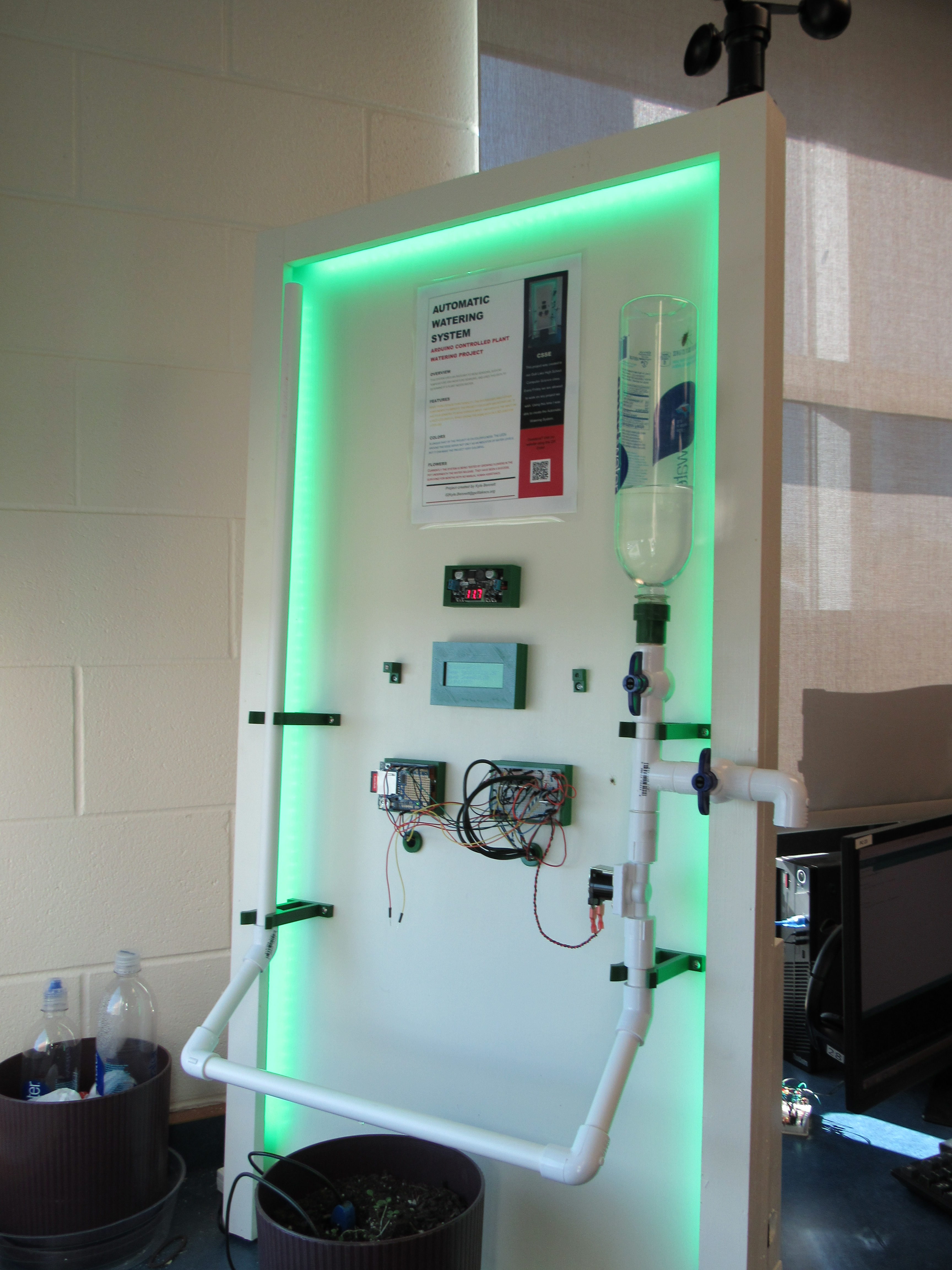
Modeled after companies like Google and 3M, CSSE students spend 20% of their time, every Friday, on independent or small-team research and design projects. Students are in charge of their own learning, from initial idea generation to final implementation, often researching programs not covered in the standard curriculum. On these days, the 3D printer runs constantly as students design chess pieces or custom parts in Tinkercad, while others use Unity to build video games. One student even utilized this time to build a personal computer capable of supporting multiple peripherals simultaneously.
The year culminates in Innovation Day, a gallery-walk style event in the media center where students showcase their projects, ranging from automatic watering systems to phone apps, to district staff, students, and representatives from major local corporations.
An Art Center for Personalized Learning
The Gull Lake Center for the Fine Arts (GLCFA) facility further expands personalized learning opportunities. Funded by a 2018 construction bond and opened in April 2022, the center provides a comprehensive pre-K through 12th-grade experience in the arts, allowing students from across the district to showcase their talents in band, choir, and visual arts.
World-Class Facilities
- 880-Seat Auditorium: Built with industry-standard technologies, this large performance space hosts theatre productions, band festivals, and choir concerts.
- Full Art Gallery: The center includes a dedicated gallery walk area where students can display 2D, 3D, and digital art created in traditional classrooms or through virtual programs.
- Versatile Usage: Beyond the arts, the large auditorium space is utilized for district needs, such as student testing.
The GLCFA is the hub for several performance-based groups that emphasize student leadership and skill-building:
- Performing Arts Company (PAC): PAC productions are truly student-focused, with members responsible for every aspect of a show, including acting, directing, costumes, makeup, props, lighting, and sound. Their yearly schedule typically includes two full productions, a one-act production, and a 24-hour theater festival.
- Music Programs: The center hosts both middle school and high school bands and choirs. These programs focus on proficiency, music theory, and team atmosphere, frequently earning superior ratings at festivals.
- Inclusive Participation: The facility is open to all Gull Lake students, including those in the Gull Lake Virtual Partnership and homeschool programs, who use the center for showcases and organized events.
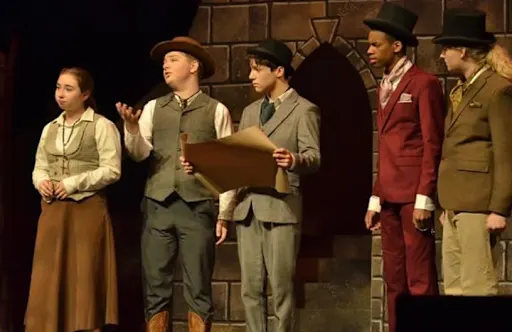
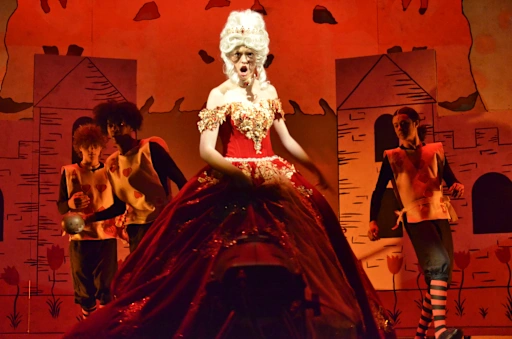
In addition to student events, the facility hosts external performers, similar to those scheduled at the not-too-far-away Kalamazoo Fine Arts Center or Western Michigan University, to provide students and the community with exposure to professional arts.
By providing a professional venue for students to practice, perform, and display their work, the GLCFA opens the door for significant personalized learning opportunities in the fine arts.
A Hub for Blending Learning
The Gull Lake Virtual Partnership (GLVP) began in 2011 as a K-13 school option tailored to each student’s unique personalized learning pathway. Today, over 1,400 students are enrolled in online courses, many of which are created by Gull Lake staff. GLVP is a vital partner in blending learning, allowing students to choose from full-time virtual, part-time/homeschool, or co-enrollment paths. Every student is paired with a caring mentor who connects with them at least once a week, often meeting at the public library, local coffee shops, or virtually, to support their progress.
The inception of the part-time homeschool program marked the true beginning of Gull Lake’s vision for personalized learning. This partnership not only met the specific needs of families seeking a hybrid approach but also served as a catalyst for expanding overall district programming. Innovative offerings that are now staples of the traditional school, such as robotics and fencing, actually began within the partnership program before being woven into the broader district curriculum. Due to its success and popularity, the part-time homeschool program consistently maintains a waiting list for new enrollees.
This specific program is also characterized by a high level of parental involvement, as parents are more engaged here than in any other district offering. All courses within the part-time program feature a virtual component paired with an optional learning experience, which is often led by a community expert to provide hands-on, real-world context. This historical foundation of collaboration between the school, community, and families continues to drive the district’s ability to provide engaging, personal learning experiences that transcend traditional classroom boundaries.
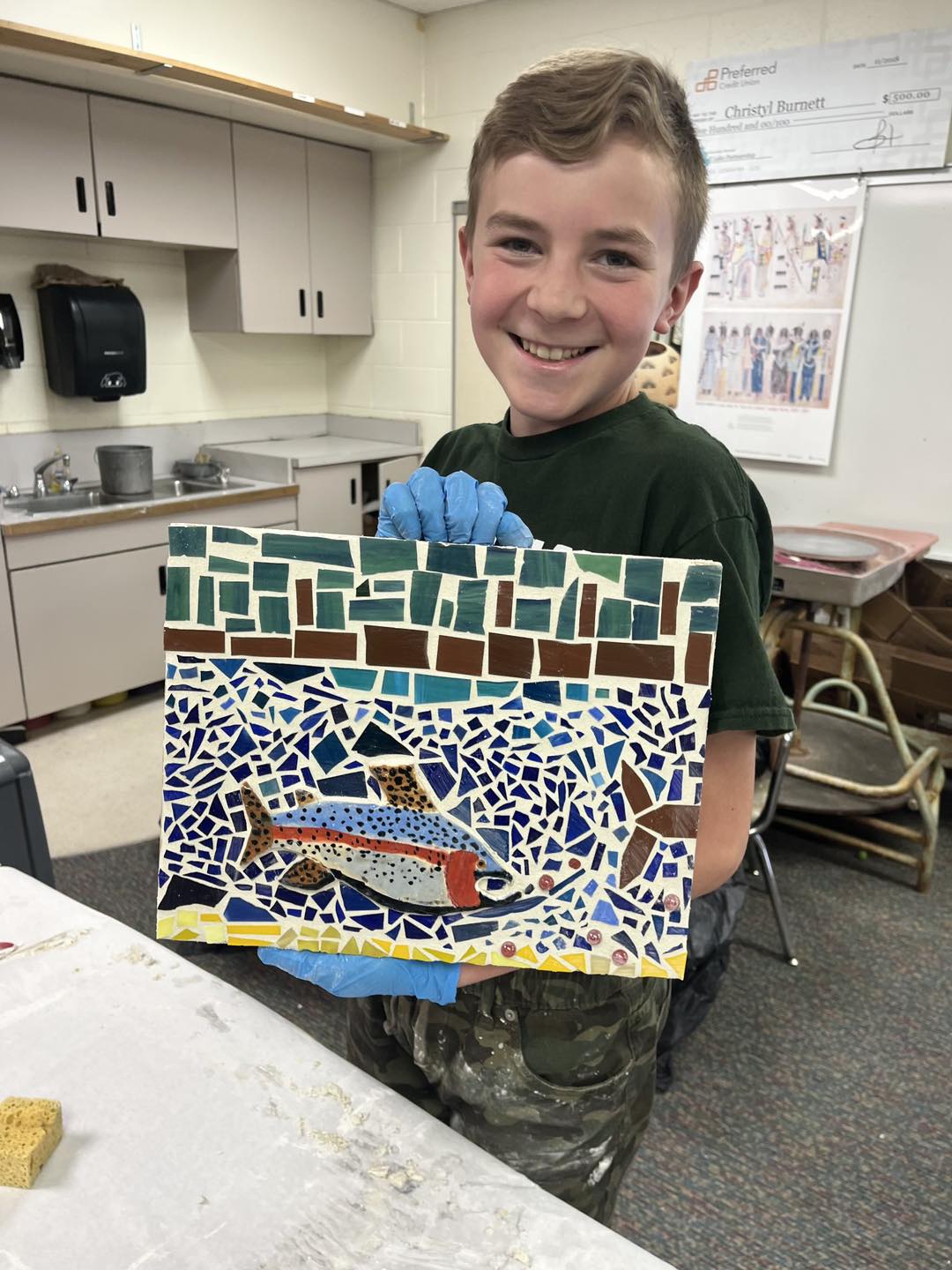
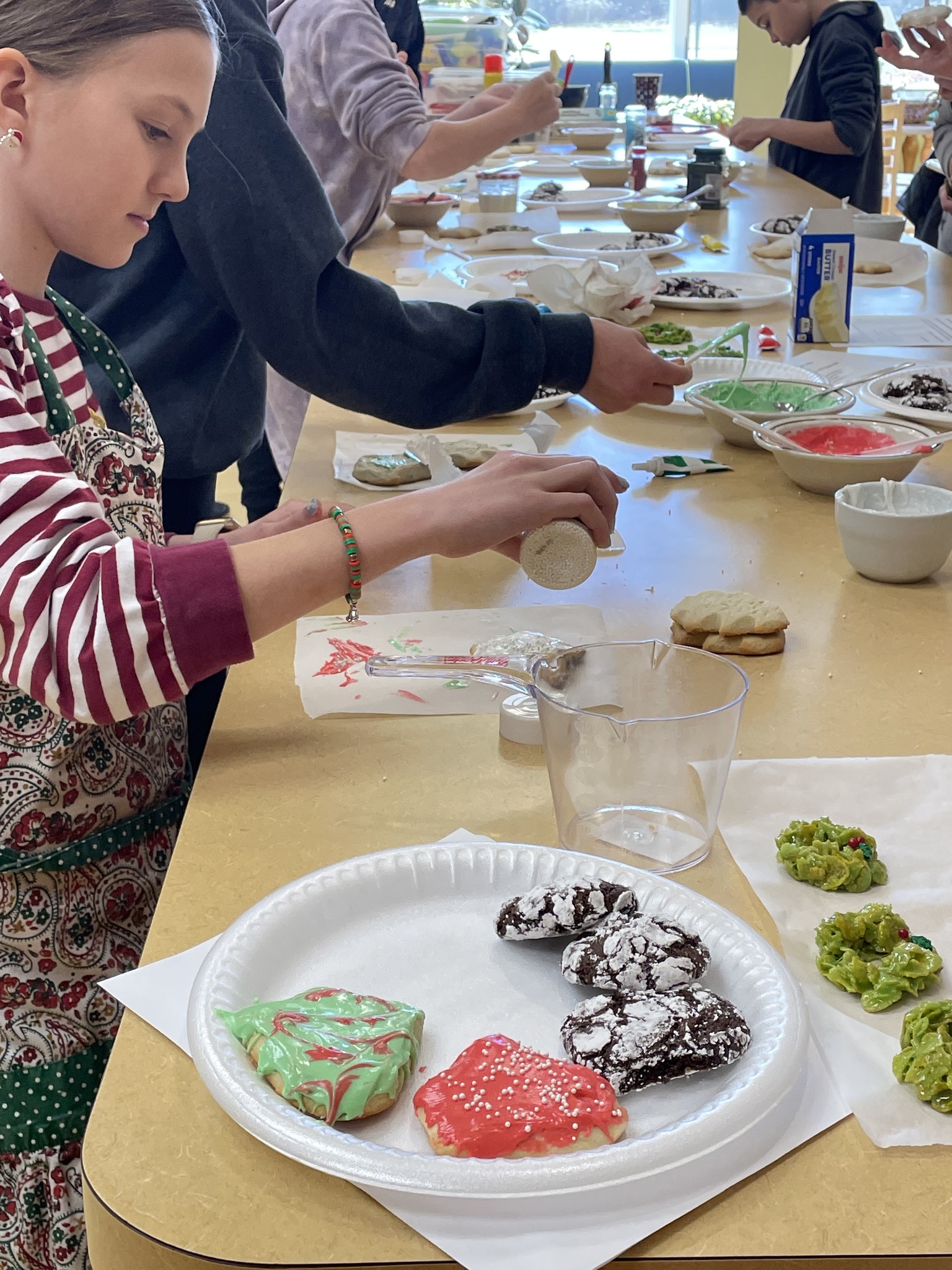
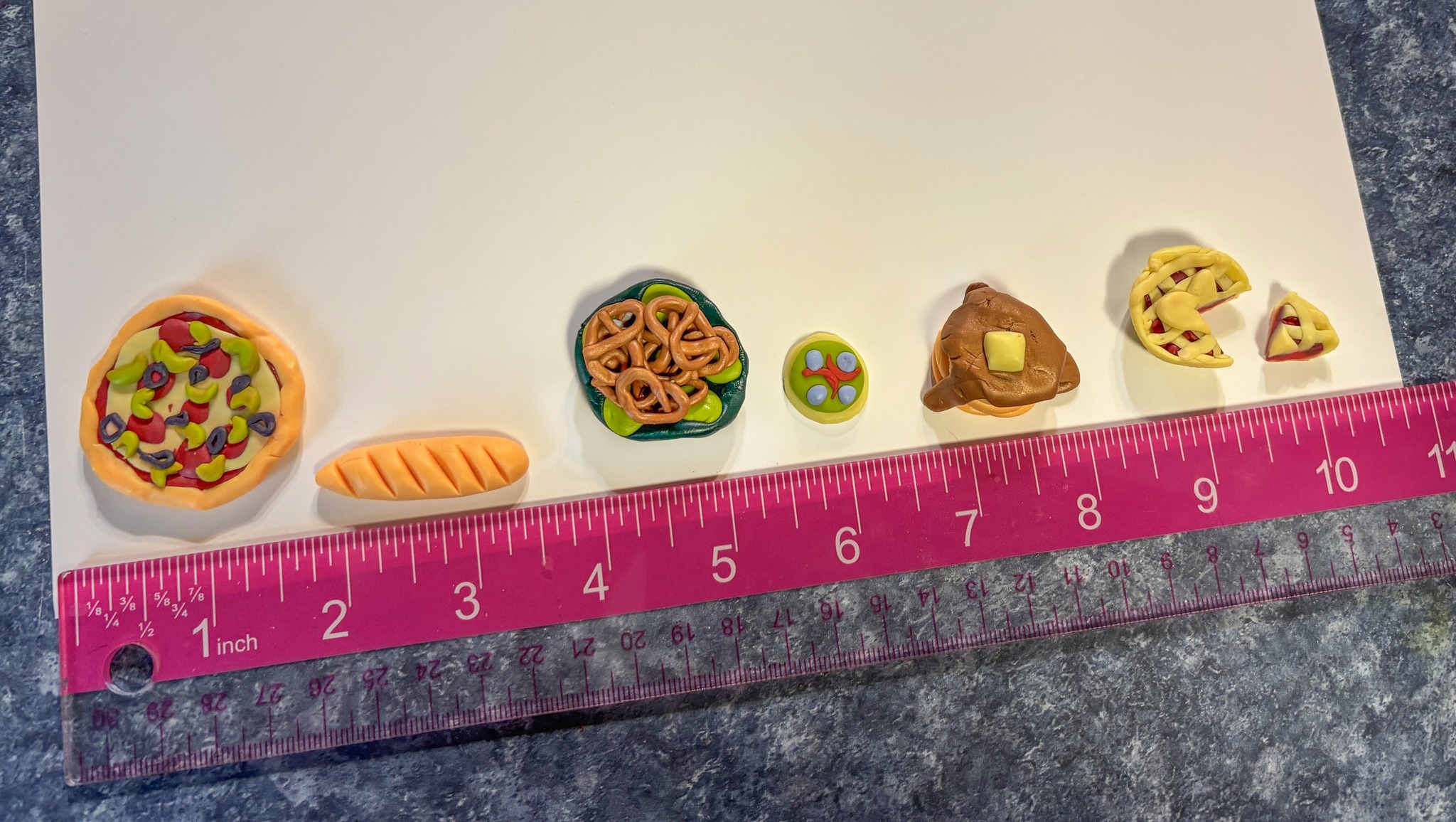
The success of GLVP demonstrates that virtual learning creates new professional pathways for educators just as it does for students. To date, the virtual program has had zero retirements, demonstrating remarkable staff retention and satisfaction. Many teachers have transitioned from the traditional brick-and-mortar classrooms to teach K-12 within GLVP, finding it a fresh opportunity to showcase their skills and talents in a digital environment.
A prime example of this longevity is Mr. Blakely, a veteran math teacher and former baseball coach. After teaching for 25 years in traditional classrooms, he transitioned to GLVP 15 years ago. Even after moving away from the area, Mr. Blakely has continued to teach for the partnership, proving that the virtual model offers flexibility and career endurance that traditional settings often cannot.
The program’s academic rigor is exemplified by courses like Math for College Success, which utilizes ALEKS software to provide students with individualized curricula. This data-driven approach has yielded impressive results, with some students increasing their math proficiency by over 200%. To complement virtual learning, full-time students have access to in-person support: K-5 students participate in weekly Skillbuilders sessions, while grades 6-12 attend a three-hour Math & ELA lab co-taught by core teachers and interventionists. Beyond the classroom, GLVP fosters unique community partnerships, such as sailing on Gull Lake or ski incentives at Cannonsburg, that reward academic consistency with enrichment opportunities.
The heart of the part-time and homeschool program is the Bedford facility, a repurposed elementary school where every inch is utilized for learning and community connection. Managed by a building specialist, the facility hosts "one-room schoolhouse" style applications that are hands-on and investigative. The atmosphere is familial; teenagers organize their own movie nights and dances, and families coordinate group field trips. Whether students are checking out computers for virtual or project-based courses or attending the youth-directed events, GLVP provides a personal learning experience that truly blurs the lines between programs.
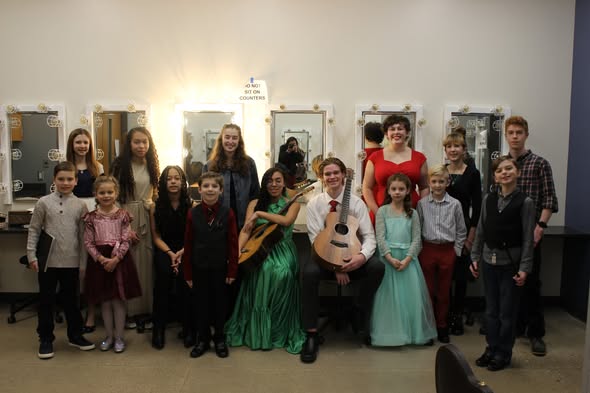
GLVP Digital Media students took second place in the 2024 Michigan Alternative Education Organization (MAEO) STARS Video Promotion Contest for their video titled "School of Dreams."
Empowering Future Scholars
The Gull Lake Early College (GLEC) program serves as a cornerstone for blending learning, bringing together students from across all district programs. GLEC is unique in the state because it rejects the "one-size-fits-all" approach, allowing students to choose their own specific program of study. One student might pursue health careers at Kalamazoo Valley Community College (KVCC), while another explores sustainable food systems or business at Western Michigan University, or HVAC or welding at Kellogg Community College. This freedom ensures students aren't forced into a path that doesn't align with their personal educational goals.
To support this massive undertaking, GLEC works closely with assigned college advisors from all partner institutions. The district’s dedicated mentoring staff, including classroom teachers, counselors, and virtual mentors, connect with students weekly during high school seminar time and through the GLOBE learning management system. This robust support structure has led to a more than 80% enrollment increase over the past five years, with over 300 students currently participating.
The program's philosophy is designed to:
- Empower students to continue their personal educational goals and career paths.
- Provide an opportunity for as many students as possible to attend college.
- Increase graduation from high school and the number of students enrolling in and completing college.
Students are required to take an online Early College Capstone course. This course provides a month-by-month guide through their first year of full-time college, ensuring they demonstrate true college and career readiness. Upon completion of their 13th year, students earn an associate’s degree, a certificate, 60 transfer credits, or a MEMCA certificate. As a proud MEMCA program, Gull Lake ensures its graduates have a solid plan for employment or continued education. At graduation, GLEC participants are honored with a cord from their respective college to wear during the ceremony, symbolizing their successful transition to higher education.
High-Support Personalization
Gateway Academy provides a personalized option for students needing a different approach to their education. Rather than being a separate track, Gateway is a fully integrated program that allows students to blend their learning with other Gull Lake options, such as taking non-essential courses through the GLVP, dual-enrolling in college courses, and taking classes at the Career Connect Campus. Gateway is designed for students who may have struggled in other settings, offering a more structured environment and a close, family-like atmosphere.
Located in a home-atmosphere facility, Gateway emphasizes both academic success and essential life skills. Students utilize Edgenuity curriculum on Chromebooks for core courses, but also engage in real-world training. In the building's full kitchen and laundry area, students plan menus and prepare meals. Other life skills covered include car maintenance, tax preparation, job interviewing, and budgeting. Thanks to a private donor, students also exercise weekly at the Sherman Lake YMCA.
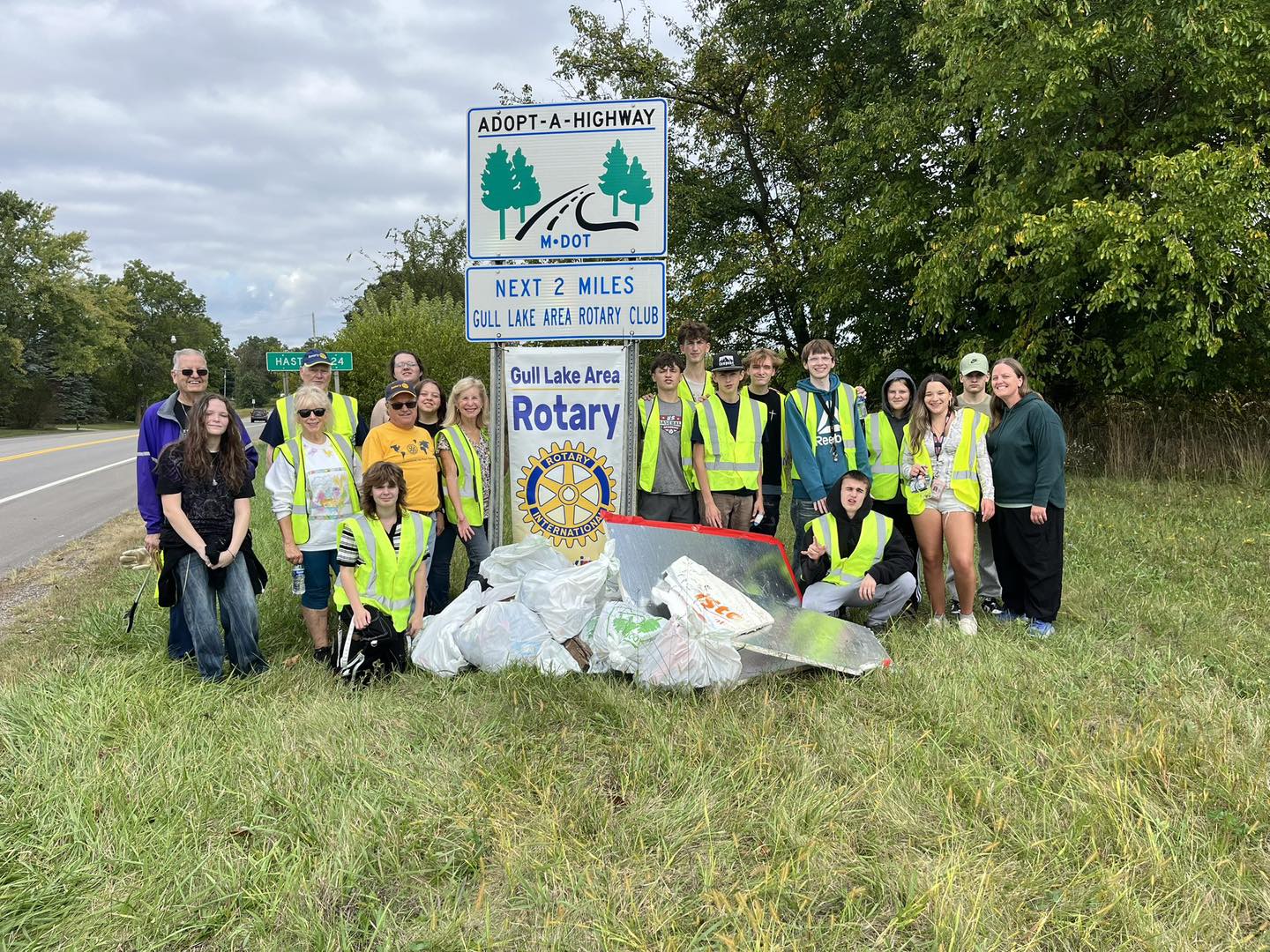
High expectations are set for every student, including a requirement to complete 20 hours of supervised community service annually. Gateway students have taught technology at community centers, assisted veterans, and served at the Kalamazoo Gospel Mission. To prepare for life after graduation, students visit area colleges and shadow local business professionals. Whether it is receiving words of encouragement on the facility's chalkboard wall or receiving mental health services in the building, Gateway ensures that students have the comprehensive support they need to become productive citizens.
Excellence Through Leadership, Support, and Equitable Grading
The district’s shift toward blending learning is sustained by a vital partnership between the Board of Education and district leadership. In innovative districts like Gull Lake, the school board and superintendent serve as the essential guides and supporters of systemic change. Without their vision and willingness to take calculated risks, the personalized initiatives prompted by staff, families, or the community would not be possible. This top-down support creates a permission-giving culture where educators feel empowered to design new pathways for students. Beyond administrative support, the district credits its growth in student-centered learning to an excellent and creative staff that consistently puts children first. This mutual respect among the board, leadership, and educators fosters a drive for excellence that ensures the district's culture of innovation leads directly to student success.
 Central to the district's success is a clear, mission-driven philosophy: you either teach students or you support teaching and learning. This principle is the engine behind the successful blending of learning and the vast array of personalized options. By intentionally putting "good people in good positions," Gull Lake ensures that every pathway, whether in a traditional classroom, a virtual lab, or a fine arts gallery, is guided by individuals who are experts in their specific roles.
In this model, a teacher’s position is tailored to the student’s needs. By aligning human talent with specific student outcomes, the district ensures that personalized learning is a lived experience rather than just a concept. Whether a staff member is a counselor using a toolbox of options or a computer science teacher mentoring a student through a difficult build, every individual is positioned to either provide high-quality instruction or remove the barriers to it.
Gull Lake is also at the forefront of pedagogical shifts that prioritize mastery over traditional point accumulation. The district has launched a 6–12 initiative focused on grading for equity and the development of robust formative assessments. This movement re-evaluates grading weight categories to ensure a student’s grade is an accurate reflection of their true knowledge and growth. By prioritizing evidence of mastery, the district ensures that the grading process supports, rather than hinders, the personalized learning journey.
To sustain these shifts and support educators in their own professional evolution, Gull Lake has implemented instructional coaching as a K–12 initiative. The district has created a dedicated coaching cycle that allows educators across all grade levels to visualize what professional growth looks like in practice. This cycle provides teachers with a collaborative partner to help refine instructional techniques and implement data-driven strategies. By investing in coaching, the district ensures that as the learning environment becomes more personalized for students, the staff is equally supported with the tools and mentorship needed to succeed in a modern, student-centered classroom.
The blending of programs can also be attributed, in part, to Gull Lakes’ commitment to the Multi-Tier System of Supports (MTSS). The focal point of MTSS is student learning. Gull Lake provides academic, social, emotional, and behavioral supports and interventions to every learner, whether struggling or advanced, so they can be successful. Based on the MTSS model, Gull Lake supports student learning with great leadership, a culture of trust and empowerment, and professional development. GLCS provides district-wide professional development, aligned to their school improvement plan, through personal learning communities (PLCs), and other opportunities and resources. Continual school improvement through data-driven decisions has changed the way the district works and collaborates.
Through the intentional blending of learning, Gull Lake Community Schools has transformed the educational landscape, moving away from a traditional "one-size-fits-all" model to one that honors the unique path of every student. By fostering a "yes and" culture supported by visionary leadership, a dedicated Board of Education, and a creative staff, the district has created an environment where innovation and personalization thrive at every grade level. Whether a student is exploring robotics in middle school, building an original app in a high school computer science lab, or earning a college degree through GLEC, they are equipped with the critical thinking skills and self-confidence necessary for the future. This commitment to rigorous, student-centered experiences ensures that every graduate leaves Gull Lake not just with a diploma, but with a personalized roadmap for lifelong success in college, careers, and beyond.
Author: Lisa Sitkins, President and CEO, LSS Connections and Consulting LLC, January 2026
This work was written with the assistance of Google Gemini. The author takes full responsibility for the final content.